

When Should You Start Skin Tightening Treatments? A Guide to Timing, Collagen, and Prevention
One of the most common questions in aesthetic medicine is not about which treatment to choose — it’s about when to start.
Patients often wonder:
• Am I too young for skin tightening?
• Should I wait until I see sagging?
• Is it better to treat early or correct later?
The answer depends on understanding how the skin changes over time and how treatments like non-surgical skin tightening work.
At VIV Life Lounge, serving Millburn and Short Hills NJ, treatment planning focuses not only on correcting visible concerns, but also on supporting long-term skin quality through the right timing and approach.
How Skin Changes Over Time
Skin aging is a gradual process that begins earlier than most people expect.
Collagen production — the protein responsible for firmness and elasticity — begins to decline in the mid-to-late 20s. From that point forward, the skin loses approximately 1% of collagen per year.
Over time, this leads to:
• reduced skin elasticity
• early laxity (looseness)
• thinning of the skin
• more visible fine lines
These changes often begin subtly before becoming more noticeable in the 30s and 40s.
The Difference Between Prevention and Correction
Aesthetic treatments can generally be divided into two approaches:
Preventative Treatments
These are performed before significant aging is visible.
Goals include:
• preserving collagen
• maintaining skin firmness
• slowing progression of laxity
Corrective Treatments
These are performed after visible changes have developed.
Goals include:
• tightening existing laxity
• restoring structure
• improving skin quality
Preventative approaches typically require less aggressive treatment over time and often produce more natural-looking results.
Why Timing Matters for Skin Tightening
Skin tightening treatments work by stimulating collagen production.
This process depends on the activity of fibroblasts — the cells responsible for producing collagen.
When treatments are started earlier:
• fibroblast activity is higher
• collagen response may be more efficient
• less structural damage needs to be corrected
When treatments are delayed:
• collagen loss is more advanced
• skin laxity is more pronounced
• results may require more sessions or combination treatments
This does not mean it is “too late” — but it does influence expectations and approach.
What Age Should You Start Skin Tightening?
There is no universal age, but there are general guidelines.
Late 20s to Early 30s
This is often when preventative treatments begin.
Goals:
• maintain collagen levels
• support skin elasticity
• delay visible aging
Mid 30s to 40s
Early signs of laxity may begin to appear.
Goals:
• stimulate collagen production
• improve firmness
• address early sagging
40s and Beyond
Collagen loss becomes more noticeable.
Goals:
• improve skin structure
• tighten existing laxity
• combine treatments for optimal results
The most important factor is not age — it is skin condition.
How XERF Skin Tightening Fits In
XERF is a non-surgical skin tightening treatment designed to target deeper layers of the skin where collagen is produced.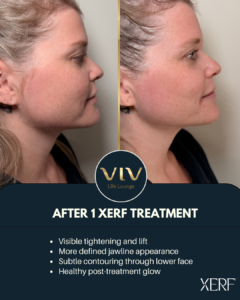
By delivering controlled energy, XERF helps:
• stimulate fibroblasts
• support collagen remodeling
• improve skin firmness over time
Because XERF works through biological processes rather than surface-level correction, it can be used both:
• preventatively
• and as part of corrective treatment plans
Learn more about XERF skin tightening here:
https://vivlifelounge.com/xerf/
Many patients begin to notice visible improvements after a single treatment, with continued enhancement as collagen production increases over time.
Signs You May Be Ready for Skin Tightening
Rather than focusing on age alone, it is more helpful to look for early indicators.
Common signs include:
• mild skin looseness along the jawline
• subtle sagging in the lower face
• decreased skin elasticity
• early creasing or folding
• changes in skin firmness
Addressing these signs early can help maintain skin quality and reduce the need for more aggressive treatments later.
Combining Skin Tightening with Other Treatments
Skin tightening addresses one part of the aging process — collagen loss.
Other factors may require additional treatments.
For example:
• Botox or Daxxify for muscle-related wrinkles
• dermal fillers for volume loss
• microneedling for texture and skin quality
A combination approach often produces the most natural and balanced results.
The Shift Toward Preventative Aesthetics
There has been a noticeable shift in how patients approach aesthetic care.
Rather than waiting for significant changes, many individuals are choosing to:
• start earlier
• maintain skin quality over time
• focus on subtle, progressive improvements
This approach often leads to more natural outcomes and less dramatic correction later.
Skin Tightening in Millburn & Short Hills NJ
Patients in Millburn and Short Hills NJ exploring skin tightening treatments should focus on individualized care rather than age-based decisions.
At VIV Life Lounge, treatment plans are developed based on:
• skin condition
• degree of laxity
• long-term goals
• overall aesthetic strategy
This ensures that treatments are aligned with both current needs and future outcomes.
Final Perspective
Skin tightening is not just about correcting visible aging — it is about managing the aging process over time.
Starting earlier allows for a more preventative approach, while later treatments focus on restoration and improvement.
The best time to begin is not defined by age, but by recognizing when the skin begins to change.
Treatments like XERF offer a non-surgical option to support collagen, improve firmness, and maintain skin quality — whether used preventatively or as part of a comprehensive plan.
